What is a Cataract?
To fully understand your cataract surgery and lens choices, it is important to start at the beginning and understand a little about how the eye works.
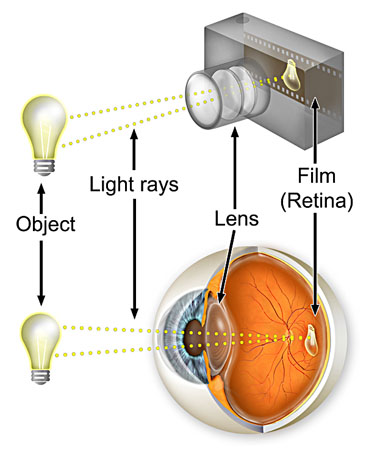
The eye is very much like a camera. The cornea is at the front, rather like an outer lens of a camera with the eyelids as the lens cap. Then comes the iris and pupil that adjust how much light enters the eye. Behind the iris is the focussing lens that focuses the rays of light onto the retina. As we age two things happen. Firstly during middle age the lens in our eye stiffens and no longer has the ability to zoom in, and we consequently need reading glasses. Secondly as we age further, the lens stiffens further and starts to become gradually more and more cloudy. This clouding is the cataract. Cataract formation is a normal feature of ageing.
What are the symptoms of cataract?
As cararacts progress there is usually a slow increase in their symptoms. One of the first symptoms is glare, particularly evident from oncoming headlights when driving at night. This glare is caused by the cataract scattering the light entering the eye to the sensitive peripheral retina. The cataract can then cause the lens to swell causing a rapid change in your spectacle prescription, leading to more frequent visits to your optician. The lens yellows, affecting your perception of colours and causing you to need brighter light with which to read. In the final stages the cataract starts to affect your visual acuity directly, reducing your ability to read smaller print and threatening your abilty to drive. At this stage patients describe their vision as cloudy, fuzzy, filmy or foggy. The cataract can also cause ghosting with the perception of double vision.
How is a cataract diagnosed?
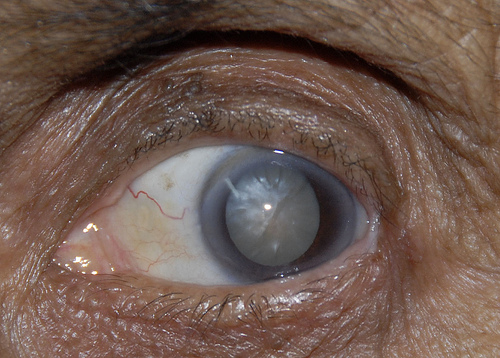
Your optician will normally detect your cataract at the time of your ocular examination. Your surgeon would then also confirm the presence of the cataract with microscopic examination in clinic and exclude any other cause for your symptoms. The photo below shows an advanced white cataract.
When is the cataract ready for surgery?
Once your cataract starts to affect your vision it will slowly progress. The timing of surgery varies from individual to individual and depends on lifestyle and activity. Essentially surgery is advised once the symptoms are severe enough to be worth the risk. For someone who drives at night this could be much sooner than for a non driver.